
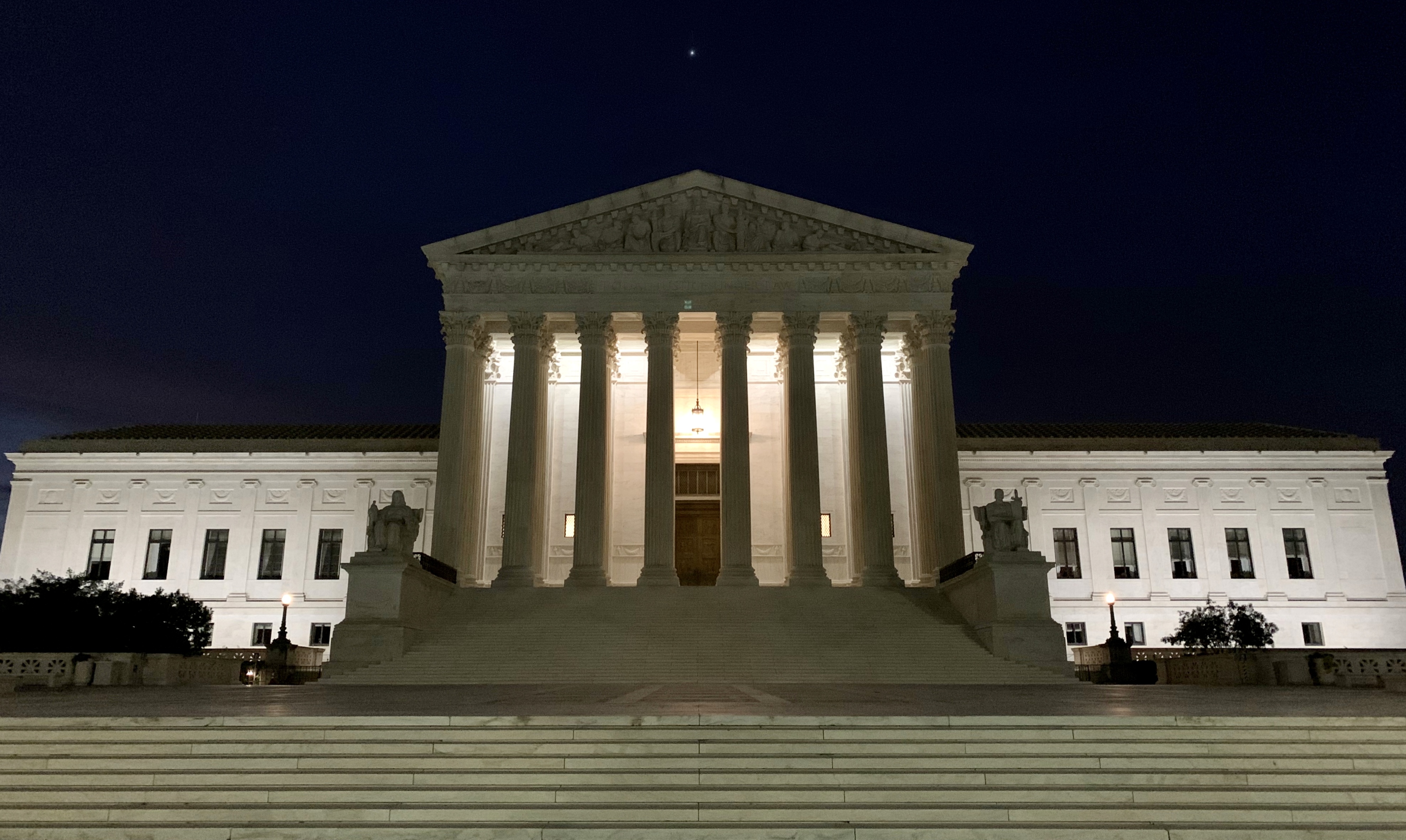
Last week, just two days after hearing oral argument, and without issuing an opinion, the Fifth Circuit stayed a district court order blocking enforcement of HB 20, Texas’s social media speech regulation—which means the law is now in effect, during litigation over its constitutionality. This startingly radical move placed in a terrible bind the social media services whose products HB 20 would destroy. Accordingly, the services immediately sought emergency relief from the Supreme Court. Last night, TechFreedom filed an amicus brief in support of their effort.
“You’ll love HB 20—if you want to glorify terrorism, spread sexually suggestive pictures of kids, celebrate the Third Reich, encourage teen self-harm, or witness cruelty to animals,” said Corbin K. Barthold, Director of Appellate Litigation at TechFreedom. “Otherwise, not so much. With only very narrow exceptions, HB 20 bans the major social media services from taking any action against material based on ‘viewpoint.’ Almost all content expresses a ‘viewpoint’ of some sort. Allow any mention of terrorism, for instance, and now you’ve got to let ISIS on board. The only way to comply with HB 20 (aside, perhaps, from turning social media into Sesame Street) is by all but ceasing to moderate content—or even to offer parental control tools. That, however, would put the services at risk of spreading tons of criminal speech. So the services are in an impossible bind.”
“No one—no lawyer, not judge, no expert in the field; not even the law’s own sponsors—knows what compliance with this law looks like,” Barthold continued. “Indeed, HB 20 is designed to generate as much litigation as possible. Any social media user in Texas may sue to undo any act of content moderation. Each lawsuit will contend that the real basis for the content moderation was the poster’s ‘viewpoint.’ Take a ban on beheading videos. Is that a viewpoint-neutral policy against a certain type of content? Or is it at heart a viewpoint-based anti-ISIS rule? Such questions are infinite, and, under HB 20, they’ll be litigated.”
“If HB 20 is left to stand,” Barthold concluded, “this much is clear: it will end with the Internet fragmenting into a patchwork of different state-by-state experiences. The unraveling could begin in earnest as soon as people file lawsuits under HB 20—which they could start doing today. It’s urgent that the Supreme Court step in and head off the madness.”
TechFreedom is deeply grateful to Mark W. Brennan, J. Ryan Thompson, Jonathan O. Hirsch, and Yanni Chen of Hogan Lovells US LLP for their pro bono work drafting TechFreedom’s brief.
###
We can be reached for comment at media@techfreedom.org. See our related work:
About TechFreedom:
TechFreedom is a non-profit, non-partisan technology policy think tank. We work to chart a path forward for policymakers towards a bright future where technology enhances freedom, and freedom enhances technology.

Today, just two days after hearing oral argument, and without issuing an opinion, the Fifth Circuit stayed a district court order blocking enforcement of HB 20, Texas’s social media speech regulation.
“This is a startlingly radical move,” said Corbin K. Barthold, TechFreedom Internet Policy Counsel. “Especially when considered alongside some of the judges’ comments at argument, it seems driven, at least in part, by spite toward what one of HB 20’s own supporters called the ‘West Coast oligarchs’ who run social media companies.”
“This stay introduces unnecessary confusion—indeed, chaos might be the word,” warned Barthold. “Social media companies now face the prospect of liability for making distinctions based on ‘viewpoint.’ (For instance, treating pro-ISIS content differently than anti-ISIS content.) But there are many other difficulties to applying this law. No one—not lawyers, not judges, not experts in the field, not even the law’s own sponsors—knows what compliance with this law looks like. If HB 20 is left to stand, though, this much is clear: it would end with the Internet fragmenting into a patchwork of different state-by-state experiences.”
Barthold is available for comment about the consequences of the ruling, what is likely to happen next in the litigation, how social media companies are likely to react, and more.
TechFreedom’s amicus brief was the only one discussed at oral argument. Other related work includes:

Yesterday, TechFreedom filed comments to the Department of Justice (DOJ) and Federal Trade Commission (FTC) in response to the agencies’ Request for Information regarding potential revisions to the Horizontal and Vertical Merger Guidelines. TechFreedom’s comments explain that the Merger Guidelines have succeeded in significant part because they do not try to do too much. Rather than complex, lengthy regulations, the Merger Guidelines should provide a flexible and durable framework that reflects the antitrust community’s consensus on how to evaluate the competitive significance of mergers. Any potential changes to the Merger Guidelines should be evaluated in this light.
“Substantial revisions to the Merger Guidelines are neither necessary nor appropriate,” said Bilal Sayyed, TechFreedom Senior Competition Counsel, former Director of the FTC’s Office of Policy Planning and a 20-year veteran antitrust lawyer. “We haven’t seen strong evidence that applying the current guidelines has allowed anti-competitive mergers to escape challenge, and neither the case law nor the economic underpinnings of merger analysis have changed.”
“The Merger Guidelines should not stray from the burden-shifting approach the Supreme Court has adopted, which is consistent with case law,” Sayyed continued. “In the interest of due process, firms should be able to defend their transactions by offering countervailing evidence to the government’s case. Efficiency claims must also remain a part of competitive effects analysis in such cases.”
“Above all, the Merger Guidelines revision process should be incremental,” Sayyed concluded. “Any modest changes ought to reflect a consensus view of the law and of agency practice. Since the courts do not have any obligation to consult these non-binding Merger Guidelines, their influence is a function of their persuasiveness.”
###
Sayyed can be reached for comment at media@techfreedom.org. Read our related work on the FTC, including:
About TechFreedom:
TechFreedom is a non-profit, non-partisan technology policy think tank. We work to chart a path forward for policymakers towards a bright future where technology enhances freedom, and freedom enhances technology.